Under constructionWe are still building the catalogue. Prices are not being tracked yet, and many sections are still being written — what is here is real, there is just not much of it.
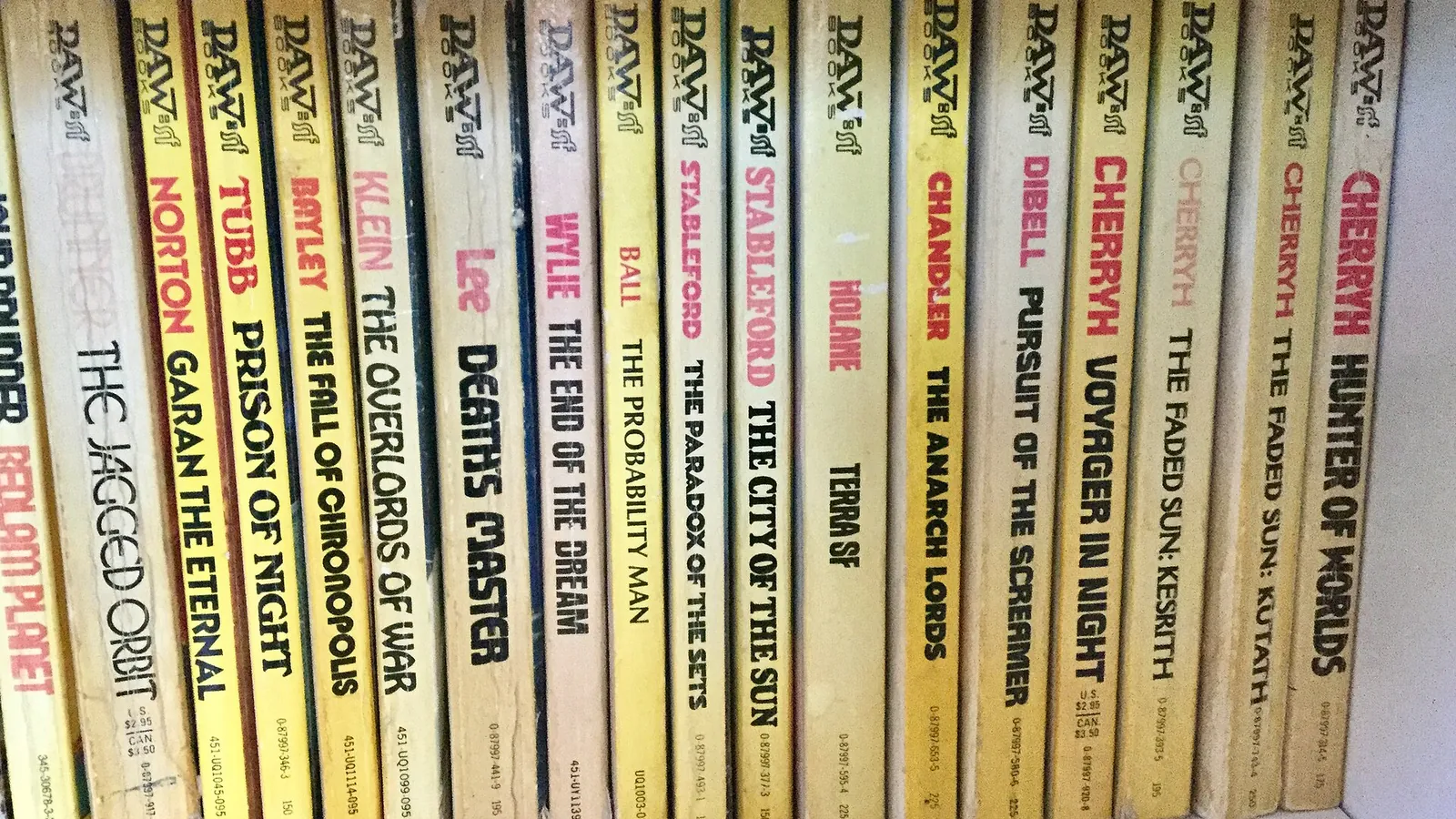
Picture: Beeblebrox · CC BY-SA 4.0 · Wikimedia Commons
The essentials
Checked against Science fiction. Source
01
Frankenstein
Mary Shelley, 1818; often credited as first true science fiction novel
02
Somnium
Johannes Kepler, 1634; called the first science fiction story by Asimov and Sagan
03
A True Story
Lucian, 2nd century CE; considered by some the first science fiction novel
04
Twenty Thousand Leagues Under the Seas
Jules Verne, 1870; noted for scientific accuracy
05
The Time Machine
H. G. Wells, 1895
06
El anacronópete
Enrique Gaspar y Rimbau, 1887; introduced the first time machine
07
A Princess of Mars
Edgar Rice Burroughs, 1912; first of the Barsoom planetary romance series
08
We
Yevgeny Zamyatin, 1924; one of the first dystopian novels
09
Amazing Stories
first American science fiction magazine, published by Hugo Gernsback in 1926
10
The Skylark of Space
E. E. "Doc" Smith, 1928; often described as the first great space opera
11
Last and First Men
Olaf Stapledon, 1930; future history across two billion years
12
Foundation
Isaac Asimov, begun 1942; introduced psychohistory